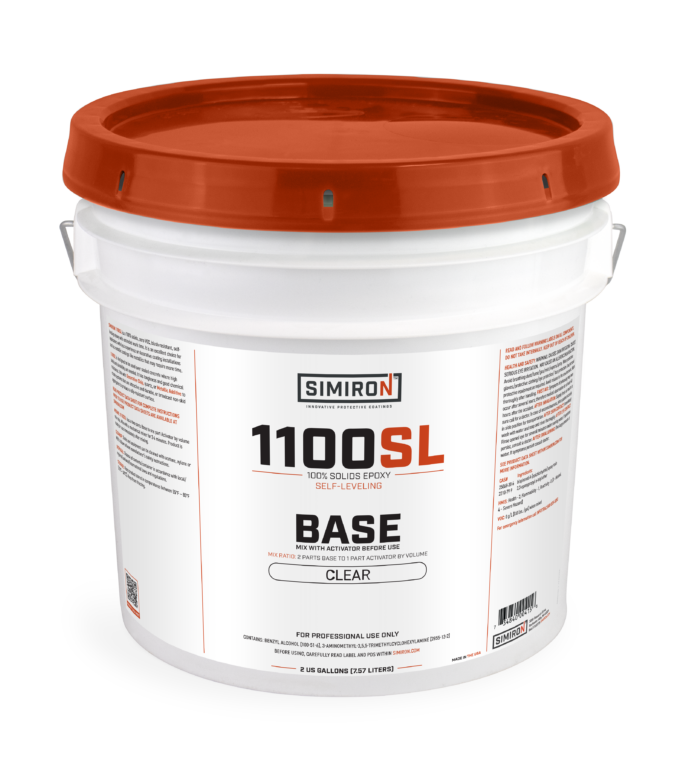

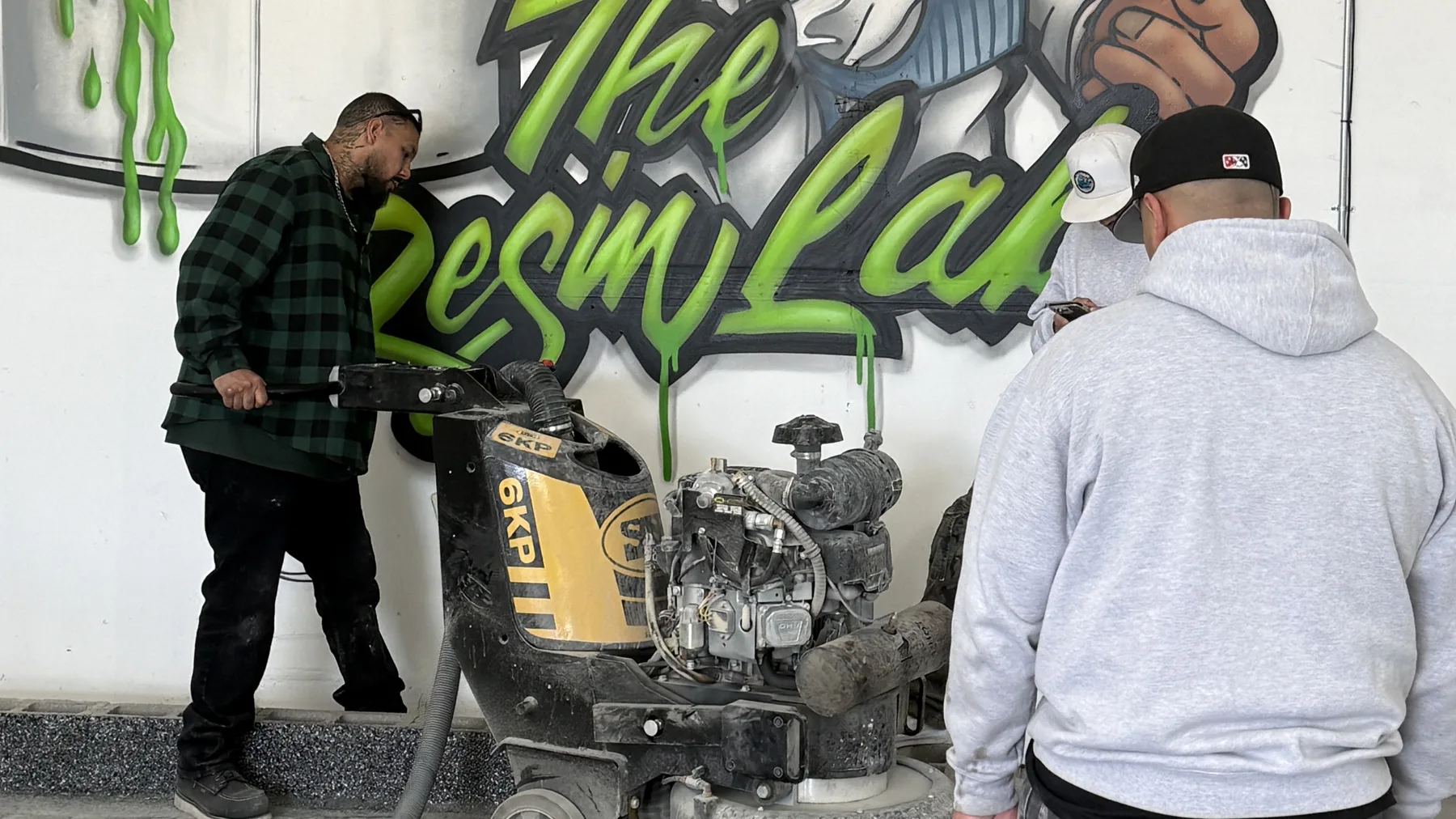
Grinding day decides the floor. Everything after it is decoration. A crew can run the best resin on our shelf over a slab that was never opened up, and the coating will come off in sheets eighteen months later with clean concrete stuck to the back of it. So before we talk about coats, let us talk about the day you spend in a dust mask in a Manteca garage with a machine and a bucket of diamonds, and how to know when you are actually done.
What profile the slab actually needs
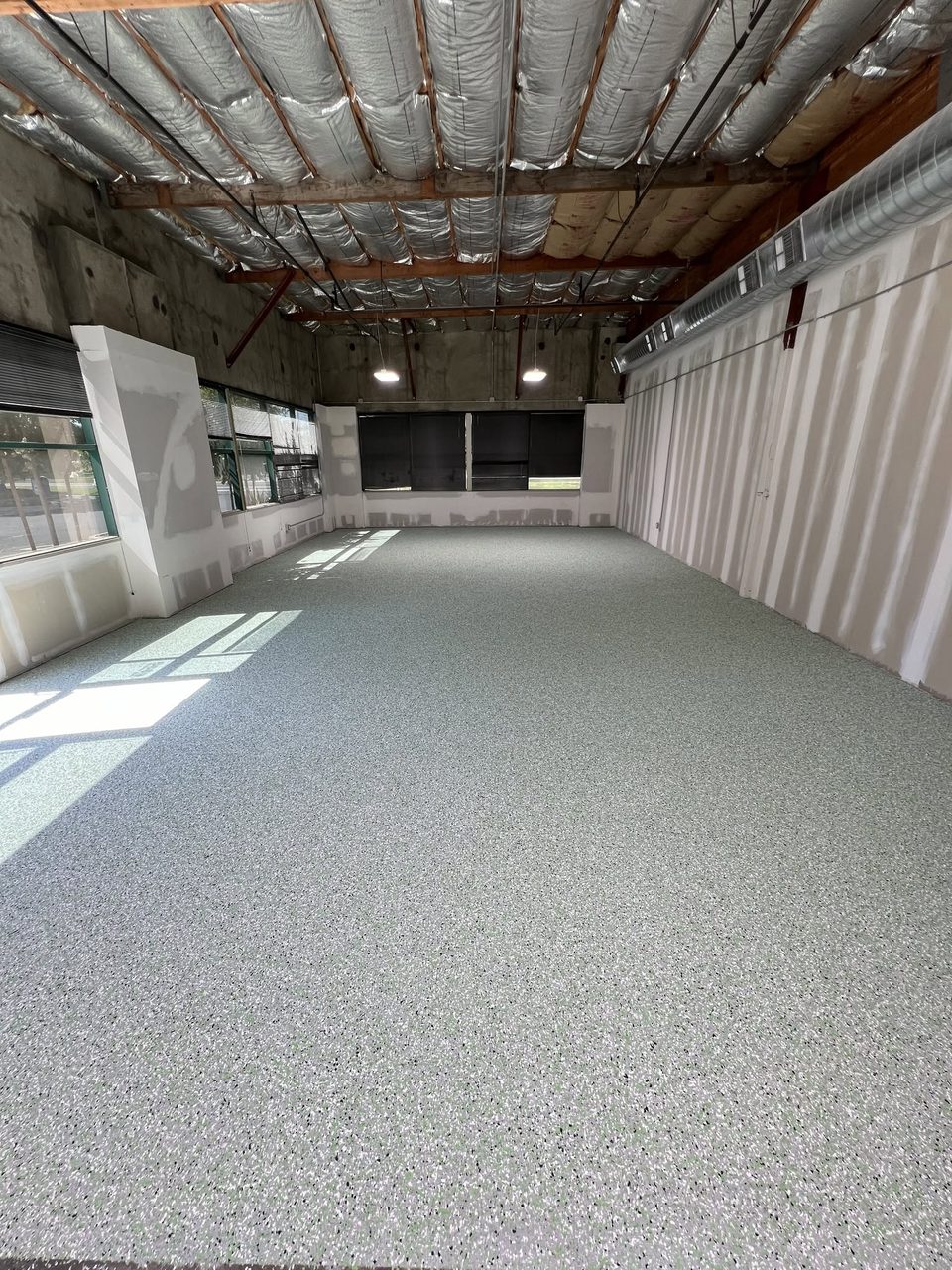
The number people throw around is CSP, the concrete surface profile scale that runs from a barely textured 1 up through the heavily scarified end. For most thin film garage builds, a base coat at ten to twenty mils with flake and a topcoat over it, the working target is somewhere around CSP 2 to CSP 3. That is a surface that reads like a hundred grit sandpaper under your palm. Heavier builds, mortars and urethane cement, want more tooth than that, and a self leveling overlay wants more still.
What matters more than the number is why the number exists. Resin does not chemically glue itself to concrete. It flows into open pore structure and into the microscopic roughness of a ground surface and mechanically locks there once it cures. If the surface is closed, and a hard troweled tract garage slab in Manteca is about as closed as concrete gets, there is nothing for the resin to grab. The bond is surface tension and hope.
That is also why acid etching keeps disappointing people. On a soft porous unsealed slab it opens the surface a little. On a power troweled slab it barely registers, and it leaves you residue and softened paste to neutralize and haul off. You did work and got no profile. Grinding is not the expensive option, it is the only option that reliably produces the surface the data sheet assumes you have.
Reading the dust as you go
The dust coming off the machine tells you more than most people realize, and it is free information you are already generating.
Fine gray flour means you are cutting cream, the paste rich top layer. Keep going. When the dust starts carrying grit, small light colored particles you can feel between your fingers, you are into the aggregate matrix and you are opening real profile. If the dust suddenly goes sticky or gums up on the segments, something is on that floor that should not be, usually a cure and seal or an old sealer, and you need a more aggressive metal bond rather than more passes with what is on the machine.
Extraction changes what you can see. Running a grinder without a dust extractor in a closed Manteca garage in September is miserable and it also blinds you, because the floor disappears under a cloud and you cannot judge the cut. Hook the machine to an extractor, keep the filter clean, and pull the hose off every so often so you can actually look at what you cut.
And listen to the machine. A planetary head laboring and bogging on a section means a harder pour in that area, common where a slab was placed in more than one truck load. The hardness changed, the tooling should change with it.
Tooling by slab hardness, not by habit
The single most common mistake we hear at the bench is a contractor fighting a slab for four hours with segments that were never going to cut it. Diamond tooling works on a counterintuitive rule: the softer the bond holding the diamonds, the harder the concrete it belongs on.
On a hard slab the concrete is not abrading the metal bond much, so a hard bond will not release worn diamonds and expose fresh ones. The tool polishes itself smooth and stops cutting. A soft bond wears away fast enough to keep feeding new diamond to the surface. On a soft slab the reverse is true: a soft bond disappears in an afternoon, and you want a hard bond that lasts.
Grit sequence is simpler. For coating prep you are not polishing, so you are not walking through a long grit progression. A metal bond in the 16 to 30 grit range takes coatings and cream off, and a 30 to 60 step evens out the scratch pattern where you need it. Stopping there is fine. Going finer starts closing the profile you just spent the morning opening.
If you do not know the hardness of the slab you are walking onto, bring a couple of bond options. We stock segments across the range at the Tracy bench precisely because nobody can tell slab hardness from a photo, and a second trip for the right metal costs more than carrying a spare set.
The checks that tell you the floor is ready
Do not decide by eye. Three quick checks settle it.
The water drop first. Pour a small puddle on the ground slab. If it wets in and darkens the concrete within a few seconds, the surface is open. If it beads and sits there looking at you, something is still on the floor or you have not cut deep enough. Run this in four or five spots, including the corner the crew rushed, because slabs are not uniform and the rushed corner is where the failure will start.
Then feel it. Drag an open palm across the surface. It should catch, not glide. A ground floor that feels slick under your hand is a floor you polished instead of profiled.
Then look at the edges. The perimeter and the areas around the door are where hand grinders do the work, and a hand grinder cuts differently than a planetary. A ring of under profiled concrete around the outside of an otherwise perfect floor is the classic Monday morning callback, because peeling starts at an edge every time.
One thing grinding will not fix is a wet slab. Profile and moisture are separate problems, and a slab pushing vapor will fail a perfectly profiled coating. If the slab is on grade with no vapor retarder under it, which describes a lot of older construction, test for moisture before you commit to a system.
Planning a Manteca prep day around the heat
Prep is the physical part of the job, and doing it in a closed garage in Central Valley heat is the part that wears crews down into shortcuts. Plan around that instead of pretending it is not happening.
Start early. A Manteca garage at seven in the morning in September is a different workplace than the same garage at two in the afternoon, and the grinding is the part of the day that benefits most from cool air. Open the door, set the extractor so it is not dumping exhaust heat back into the room, and take the water breaks you think you are too busy for.
Sequence matters too. Grind, then vacuum thoroughly, then patch and fill, then vacuum again. Patching before grinding means you grind your patch material off. Coating over grinding dust means you bonded your resin to dust rather than to concrete, which is a failure that looks exactly like a bond failure and gets blamed on the resin every time.
If your machine will not be enough for the slab, that is worth knowing on Tuesday and not on Saturday morning. Manteca is about 12 road miles from our Tracy bench, so a contractor working that market can call in the morning and pick up a machine, an extractor and the right segments the same day rather than losing a weekend. That is a large part of why we keep grinder rental stocked instead of only selling material, and why crews working Manteca jobs tend to order the prep side and the resin side from the same phone call.
Grinding day questions from the bench
How do I know when I have ground enough?
Water drop test in four or five spots. If the water wets in and darkens the slab within a few seconds you have an open surface. If it beads, keep cutting or find out what is still on that floor. Back it up by feel, because a properly profiled surface catches your palm rather than gliding under it.
Can I skip grinding and just acid etch a garage slab?
Not on a hard troweled slab, which is what most garages are. Etching barely opens a closed surface and it leaves residue and softened paste behind that you then have to neutralize and remove. You end up doing work and having no profile to show for it. Grind it.
My grinder stopped cutting halfway through. What happened?
Usually the wrong metal bond for the hardness of that slab. On hard concrete a hard bond glazes over and quits releasing fresh diamond. Switch to a softer bond so the segment wears and keeps exposing new diamond. If the dust went sticky instead, there is a sealer on the floor and you need a more aggressive tool.
Prep is the least photographed day of any resin job and the one that decides whether the floor is still there in five years. If you are unsure what your slab needs, call the bench at (209) 208-4656 and describe what you are standing on, or send over the square footage and what you are seeing and we will work out the tooling with you before you rent anything.