The phone call usually sounds the same. A floor went down in an old shop building, it looked perfect at the walkthrough, and a few weeks later there are blisters near the back wall and a patch of coating lifting by the door. The installer did nothing wrong with the resin. The slab underneath was pushing moisture the whole time, and nobody checked before the first coat. Around Ripon, a lot of floor work happens in exactly those buildings: equipment shops, barns and outbuildings that went up long before anyone planned to coat them. This post is about reading that kind of slab and putting a barrier under it.
Why outbuilding slabs are the usual suspects
A house slab or a newer commercial slab is often poured over a vapor retarder, a sheet that slows ground moisture from wicking up into the concrete. Barns, ag shops and older outbuildings often went down without one. Nobody was thinking about a resin floor when that concrete was placed. They wanted a hard surface to park a tractor on.
Without a retarder, the slab sits in direct contact with the ground and draws moisture up through it. On bare concrete you never notice. The water vapor just leaves through the open surface and the floor looks dry.
Seal that surface with a coating and the vapor has nowhere to go. Pressure builds under the film and goes looking for the weakest bond in the system. Ripon is ringed by almond orchards with the Stanislaus River along its south edge, so assume nothing about the ground under an old building. The slab may be fine. It may not be. The only way to know is a reading, and the reading comes before you price the job or pick a color.
What a floor over a wet slab looks like later
Moisture failure is patient. It rarely shows up on day one, which is why it catches good installers off guard.
The first signs are usually small bubbles or blisters, sometimes only a few in one corner. Press one and it may feel soft or give a little. Later the coating can lose its grip in sheets and peel back from an edge, a joint or a doorway. On some floors the finish goes cloudy or whitens in patches instead of blistering, which reads as a product problem to the property owner even though the product is fine.
Whichever way it shows, the result is the same callback. The property owner sees a failed floor, the installer pays to grind it off, and the second attempt costs more than doing it right would have. That is why the owner calls slab moisture the number one cause of a callback, and why he will tell you the slab does not care how good the topcoat is.
Test first, then decide
The order never changes: test first, barrier second, build third.
We stock moisture test kits so nobody has to guess. Run the test on the slab you are about to coat, then call us with the calcium chloride or RH number. We spec the barrier around that reading, or we tell you plainly when the slab does not need one.
Take readings in more than one spot on a big shop floor. An old building can be dry near the bay door and damp at the back corner where the ground sits lower or a downspout drains against the wall. One good number from the driest spot does not clear the whole slab.
Before any of that, grind. A barrier primer bonds to the same mechanical profile any coating needs, and grinding also opens up whatever old sealer or paint is hiding on the surface. Test the open concrete, not a sealed skin on top of it. If the slab is new rather than old, say so on the call, because fresh concrete holds a lot of water and often needs a high-tolerance barrier to coat early.
One barrier under any system
A moisture vapor barrier is not a finish and it is not tied to one look. It sits at the bottom of the stack and keeps the slab from pushing on everything above it.
That means it goes under whatever the property owner picked. A flake floor in the equipment shop gets the barrier, then the build coat and broadcast. A metallic floor in a converted outbuilding gets the barrier, then the metallic base. A quartz broadcast floor in a wash bay gets the barrier before the first broadcast, and that is one of the places we consider it critical.
Once the slab is sealed, the system on top builds the way it normally would. An epoxy build coat goes down over it, and on an uneven old slab a self-leveler can flatten the sealed surface before the finish layers. Ordering the barrier together with the coatings keeps the layers matched to each other. The full picture of what we ship for this work is on our moisture vapor barrier page for Ripon, and if the slab still needs its profile, the diamond grinding segments for Ripon are on the same shelf.
The barrier lines on our shelf
We carry more than one MVB line because slabs and crews are not all the same.
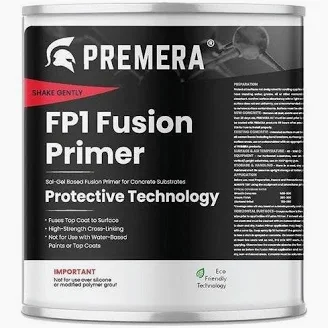
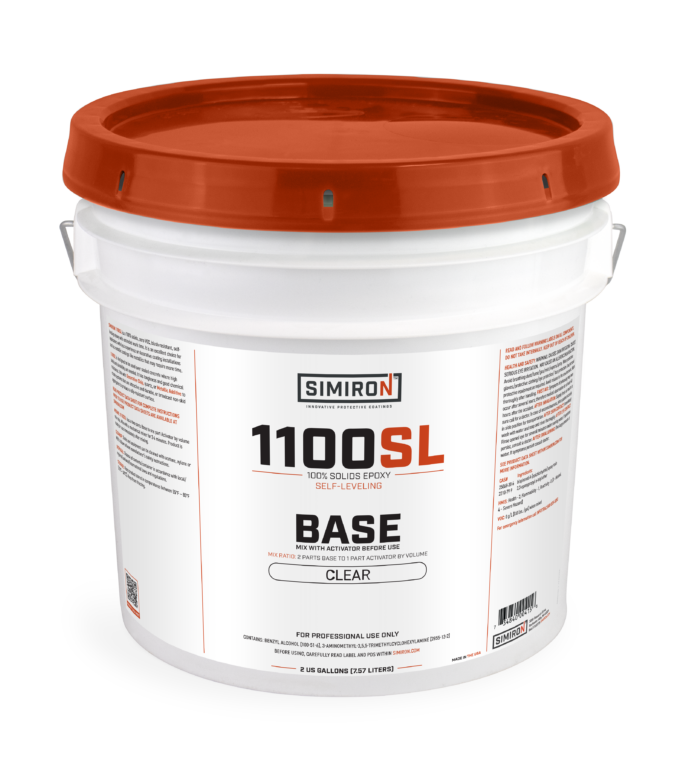
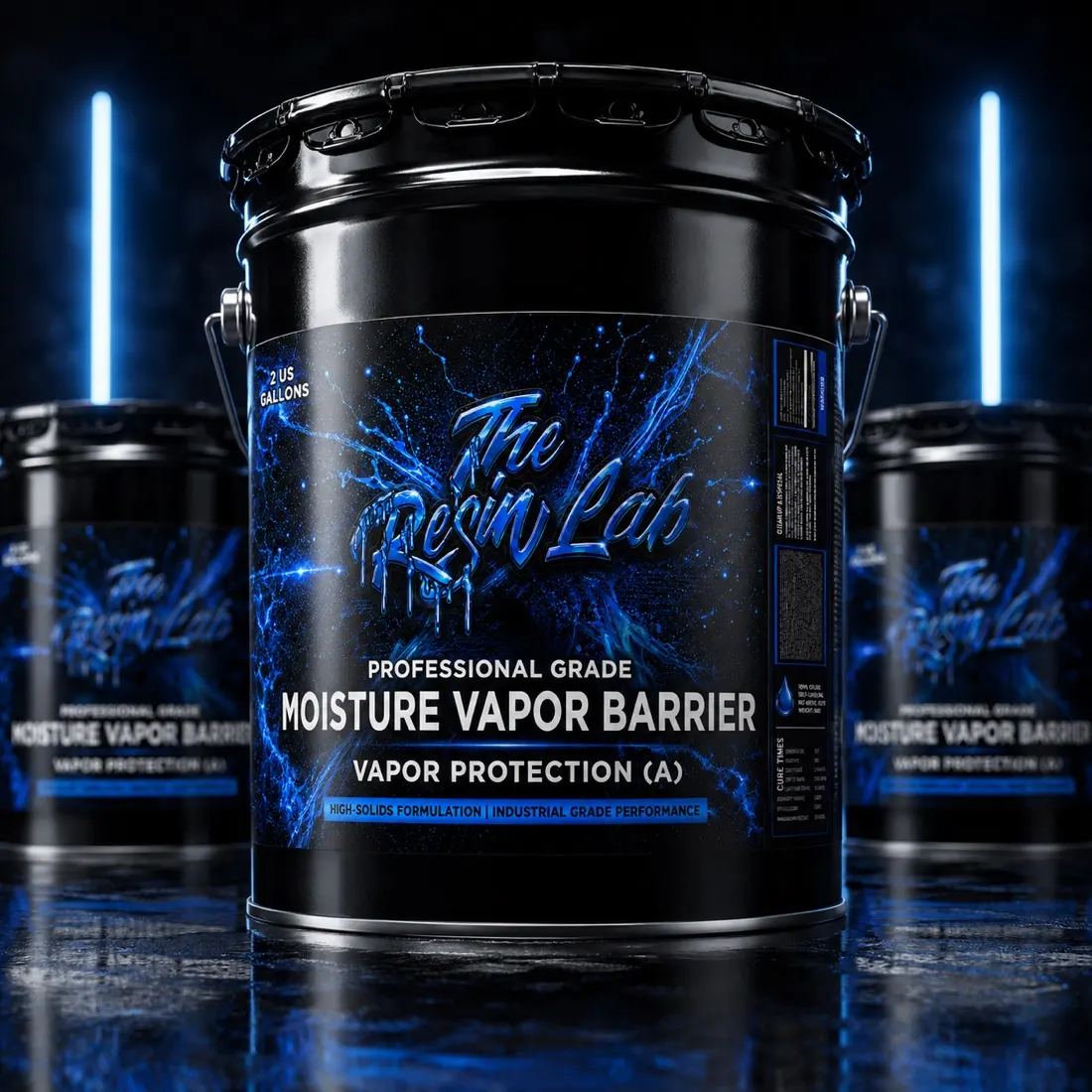
The Resin Lab MVB Primer is the one pictured above. It seals a damp or green slab so the system above it can cure and stay put. Simiron MVB sits next to it, and JP Resin MVB Flow is the third line we stock. Three barriers on one shelf gives us room to fit the slab instead of forcing the slab to fit whatever happens to be in the back room.
Which one fits depends on the reading, the age of the slab and the system going on top. That is the whole reason we ask for the number before we ship anything. Every line earned its spot by holding back moisture on slabs that would otherwise have lifted a finish, and we would rather match one to your floor than push the same bucket onto every job.
Old slab questions we hear from Ripon installers
Can a barrier save a floor that is already peeling?
No. A moisture barrier is preventive, and it cannot reach under a coating that has already let go. A failing floor needs diagnosis first and usually removal down to sound concrete. After that, test the bare slab like any other job and put the barrier down before the new system. Call us with photos of the failure and we will talk it through.
Is a brand new slab safer than an old one?
Not necessarily. Fresh concrete holds a lot of water as it cures, so a new slab can be a moisture problem in its own way. Coating early often takes a high-tolerance barrier built for that situation. Tell us the age of the slab and the test numbers, and we will spec a barrier that matches where the concrete actually is today.
Do I still need to grind if the slab gets a barrier?
Yes. The barrier bonds to a mechanical profile the same way any coating does, so it needs open, clean concrete underneath it. Grinding also strips old sealer and paint that would give you a false moisture reading. Grind, vacuum, test the open slab, then barrier, then build the rest of the floor on top of the sealed surface.
An old shop slab can carry a great floor once it stops pushing water. Send the readings through our contact page or call (209) 208-4656, and the owner will match a barrier to the building.