
Two pails of the same polyaspartic can sit side by side on the bench, one labeled fast cure and one labeled slow cure, and the right pick for a Ripon garage in July may not be the one you reached for last time. Central Valley summers are long and hot, and the topcoat is the layer that feels it most. It goes down last, it moves fastest, and it is the part of the floor everyone looks at. This post covers why the clear matters with the door rolled up, and how to choose between the two versions before the heat chooses for you.
Why the clear matters with the door rolled up
Most garage and shop floors in Ripon spend a lot of time with the big door open. Equipment comes and goes, the bay airs out, and afternoon sun slides right across the floor. A garage with a window or an open door is a garage with sunlight on the coating.
Plain epoxy clears tend to go amber under that light. The color you sold, a gray flake or a pale metallic, slowly shifts warmer and duller, and it happens first in the strip nearest the door. The property owner notices it before you do.
A UV-stable polyaspartic holds its color. That is the reason the owner trusts it over his own metallics and flake, and why it is the coat that decides whether a floor still looks freshly poured years later. It also returns the space to service fast, which is the other half of the polyaspartic pitch. That speed is a gift on most days. In summer heat it is also the thing you have to plan around.
Fast and slow on the same shelf
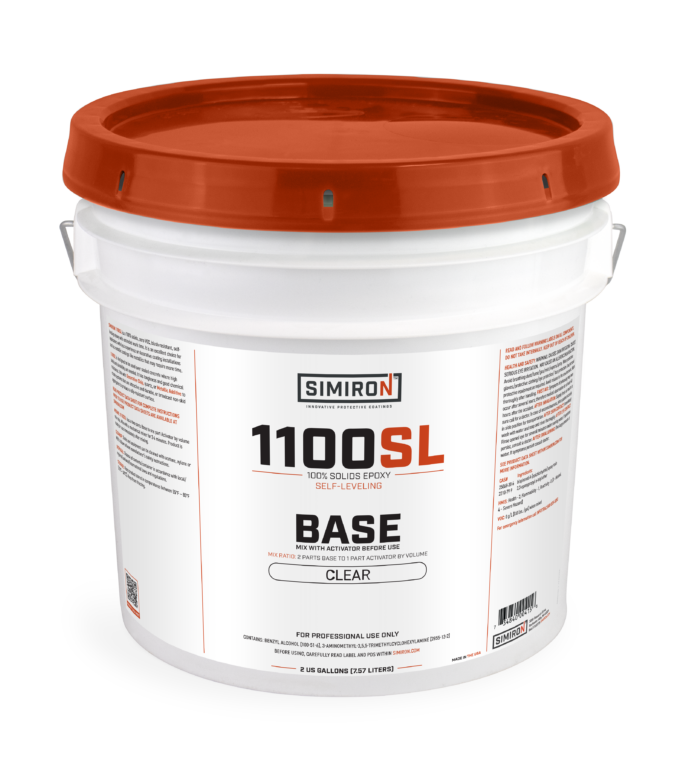
Our house UV-stable clear runs as a fast cure. We also stock Simiron Polyaspartic HS, and the Simiron line comes in fast, medium and slow cure versions, all three pictured on our product page.
The difference is working time. A fast cure version gets the floor back in service quickly and suits cooler mornings, smaller rooms and crews who already know the material well. A slow cure version gives you more time between mixing and the point where the coat stops leveling, which matters when the slab is warm, the air is hot and you have a big room to cover.
Crews who run Simiron HS by habit can keep running it, and we will tell you straight which version fits a given job. Some installers keep both on hand through the summer and pick at the door after reading the conditions. Others plan by the calendar. Either way works if the choice is made before the first pail is opened rather than halfway across the floor. You can see the full topcoat lineup on our UV-stable polyaspartic topcoat page for Ripon.
Reading the afternoon before you mix
Polyaspartics cure fast, and heat makes them faster. Pot life shrinks, the coat starts to tighten up sooner on the floor, and lap marks become a real risk when a roller line dries before the next pass meets it.
Before you mix, put a hand on the slab and look at where the sun will be in an hour. A floor that was shaded at nine may be in direct light by eleven. A slab that sat under an open door all afternoon can be noticeably warmer than the air in the room.
Then size your batches to what you can lay down inside the window. Mix what you can spread and back-roll before it turns, and no more. A pail mixed too big on a hot day becomes a pail you throw away, or worse, a pail you try to stretch across the floor after it has started to kick.
If this is your first time with a given version, call before you pour, not after. We would rather talk through a hot-day plan with you than talk you through fixing one.
Starting early instead of fighting the heat
The simplest summer move is to change the clock rather than the product. Many crews lay the topcoat in the early morning, while the slab is still holding the night’s cool and before the sun gets into the bay.
That means planning the whole sequence backward. The base and broadcast need to be ready for topcoat at the right time, scraped, vacuumed and clean, with no dust drifting in from the driveway once the door opens. Stage the mixing station in shade. Keep the pails out of the truck bed and out of direct sun until you need them.
That goes for the ride over, too. Ripon is about 18 road miles from the Tracy bench, a short haul, but a pail riding in an open bed on a July afternoon arrives warmer than it left. If you pick up the day before, store the topcoat somewhere cool overnight and bring it in the cab in the morning.
When an early start is not possible, that is where the slow cure version earns its spot. Between an early start and the right version, you can usually find a combination that gives the crew enough time to roll a clean finish. What does not work is a fast cure, a hot slab, a big room and a midday start all at once.
Over flake, over quartz, over metallic
The clear goes on top of whatever system sits underneath it, and each one asks a little something different.
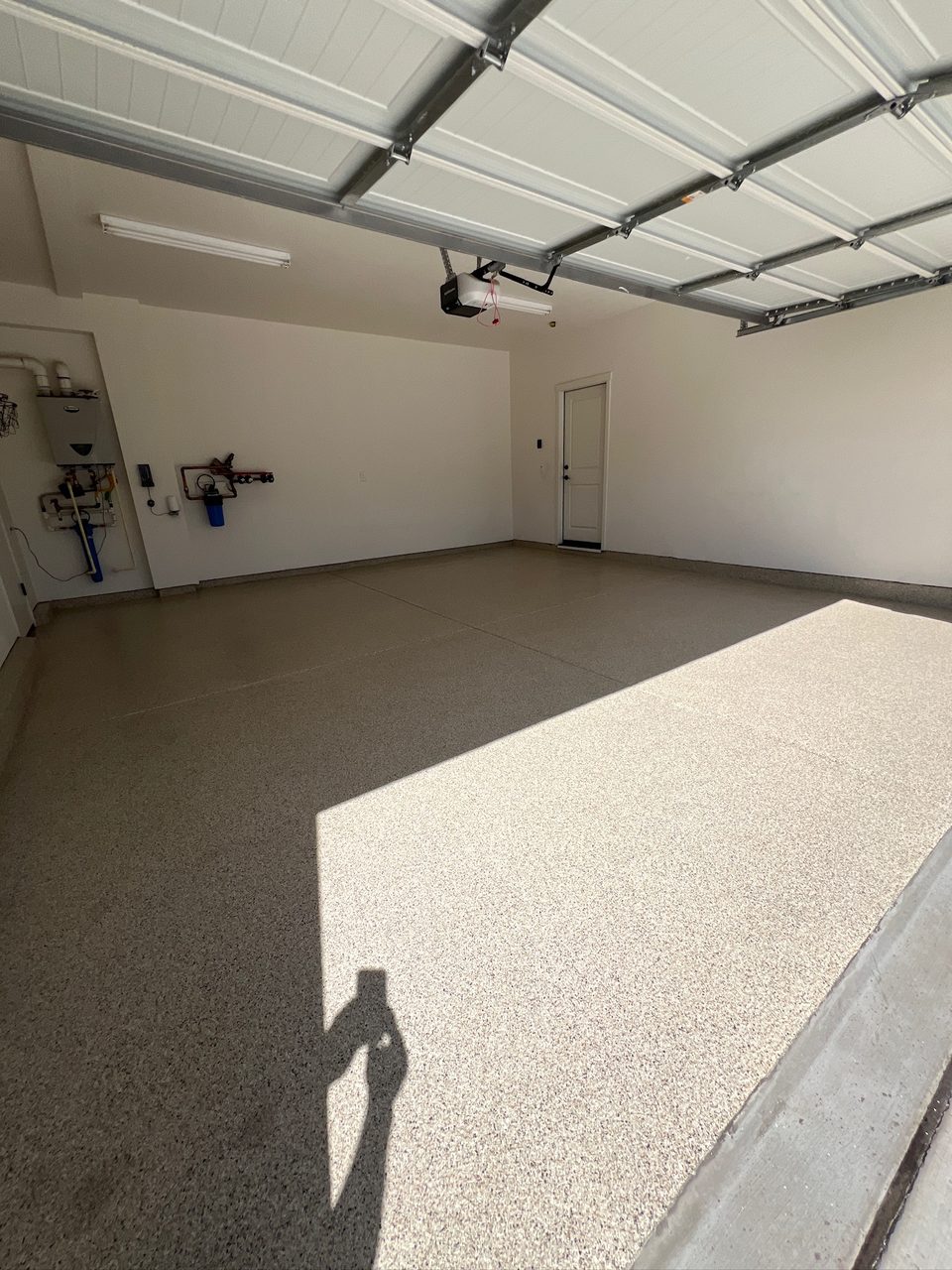
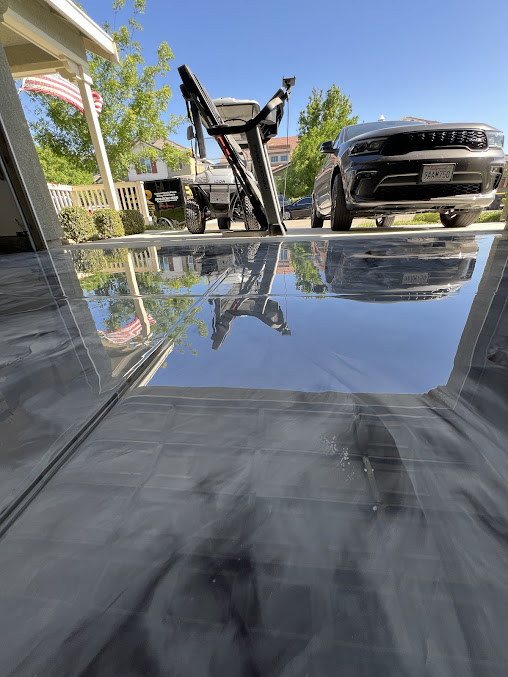
Over a flake floor, it locks the chips down after the scrape and gives the floor its gloss. The classic stack is an epoxy body, a decorative layer, then the polyaspartic clear, and it is the stack on the flake floors in our gallery. Over a quartz broadcast floor, the rough grouted texture drinks more topcoat than a smooth surface, so plan quantities with that in mind. Over a metallic, the UV-stable clear is what keeps the pigment movement looking the way it did the day it was poured.
Recoat windows and prep still apply whenever a polyaspartic goes over epoxy, so tell us your timeline when you order. Ordering the topcoat together with the base keeps the stack matched, and if the decorative layer is flake, the decorative flake blend for Ripon ships from the same shelf.
Topcoat questions from summer jobs
How soon can people walk on a polyaspartic floor?
Fast return to service is the polyaspartic pitch. Foot traffic typically comes the same day or the next, with vehicles shortly after, and conditions change all of that. Heat, humidity and the version you chose all move the numbers. Tell us the temperatures you expect on the job and we will give you honest timing for that floor.
Will a clear topcoat make the floor slippery?
Any smooth clear can be slick when it gets wet. If the room sees water, from a hose, a wet tire or a door left open in a storm, ask for our anti-slip additive. It adds grip to the topcoat without ruining the finish. Mention it when you order so it ships with the clear and the crew has it on hand.
Is one coat of topcoat enough?
Most decorative floors seal well in one healthy coat. Rooms that take a beating, like a busy shop or a garage with heavy equipment rolling in and out, can earn two. We would rather spec that with you than sell you a bucket you do not need, so describe how the room gets used and we will count it.
Pick the version before the heat does, and the topcoat rolls out the way it should. Send the job details through our contact page, or call (209) 208-4656 and talk to the owner about a summer plan.