
Stop the grinder halfway through the first pass, tip it back, and look at the diamonds. Most installers skip that check until the floor tells them something is wrong, and by then the profile has already gone flat across half the room. Segments are the part of a coating job nobody photographs, yet every coat that follows bonds to the scratch they leave behind. On jobs along the Highway 99 corridor around Ripon, the same week can put you on a soft garage slab on Monday and a hard, dense shop floor on Thursday. One set of diamonds will not treat both the same way.
Start with the slab, not the box
Segment choice comes down to one rule that sounds backward the first time you hear it. Hard slabs want a soft bond. Soft slabs want a hard bond.
The bond is the metal matrix holding the diamonds. On hard concrete, a soft bond wears away at the right pace and keeps exposing fresh, sharp diamond. Put a hard bond on that same floor and the matrix never wears, the exposed diamonds round over, and the segment stops cutting. On soft concrete the opposite happens. The slab is abrasive enough to eat a soft bond quickly, so a harder matrix holds the diamonds in place long enough to do their work.
Before you order, tell us what the slab is. A residential garage, a newer commercial floor and an old equipment shop can all feel different under the machine. If you have scratched the surface with a screwdriver or a key, describe what it did. That one detail helps us match the bond far better than guessing from the age of the building.
Signs the diamonds have glazed
Glazing is what happens when the bond is too hard for the slab. The diamonds stop breaking through the matrix, the face of the segment turns smooth and shiny, and the machine starts skating instead of biting.
You will notice it in a few ways. The grinder feels like it wants to wander. The dust coming off the floor thins out even though you have not changed anything. The scratch pattern behind you looks lighter and polished instead of open and even. On a coating job, that polished surface is the problem, because resin needs open concrete to grab.
Leaning harder on the handle or making extra passes does not solve it. If the bond is wrong for the slab, the diamonds keep polishing no matter how much time you give them. The fix is a softer bond. Swap early. Grinding on glazed diamonds burns hours and leaves a floor that looks prepped and is not.
Walk back over the area you just ground with a flashlight held low across the surface. Open concrete shows an even, matte scratch. Glazed passes show up as bands that catch the light. If you see bands, mark them, change the segments, and go back over those strips before anyone mixes a drop of resin. Finding them under the base coat is far more expensive than finding them now.
When a set disappears too fast
The other failure goes the opposite direction. The bond is too soft for the floor, and the segments wear down at a pace you can watch. Diamonds are cutting, dust is heavy, and the profile looks great, right up until the segments are gone partway through the job.
A matched set will do multiple garages. A mismatched one can die in a single floor. If you find yourself checking segment height and seeing real loss after one room, that is the slab telling you to go to a harder bond.
Keep a spare set on the truck for any job where you have not ground that type of slab before. Running out of diamonds halfway across a floor means either driving for more or stretching worn segments over the last section, and the last section will show it once the coating goes down. Coming from Ripon, the Tracy bench is about 18 road miles away, close enough for pickup and far enough that you would rather not make the trip twice in one afternoon.
Old coating versus bare concrete
Segments that open bare concrete nicely are not always the right tool for taking an old coating off. Old epoxy, paint and mastic do not wear a segment the way concrete does. Some of them soften and smear under heat, loading the diamonds with gummy residue until they stop cutting.
If the job starts with a removal, say so when you order. The first pass may want a different setup than the profiling pass that follows. Once the old material is off, check the diamonds again, because what is left after a removal is often a different slab than the one you started on.
The goal on any coating job is the same: clean, open concrete with a profile a resin can key into. Most coatings want a CSP 2 to 3. Acid etching does not get you there, and gouging deep does not help either, because deep scratches telegraph through thin coats. Our diamond grinding segments page for Ripon covers the sets we stock for exactly this range.
Dust, the extractor and a clean read
Reading segment wear is easier when you can actually see the floor. Run the grinder with a dust extractor connected, not a shop vac and hope. Good extraction keeps the dust out of the air and off the surface, which lets you watch the scratch pattern change as the diamonds wear.
It also keeps loose fines from packing into the profile. A floor ground with poor extraction can look open and still carry a fine layer of dust that the primer sits on instead of in.
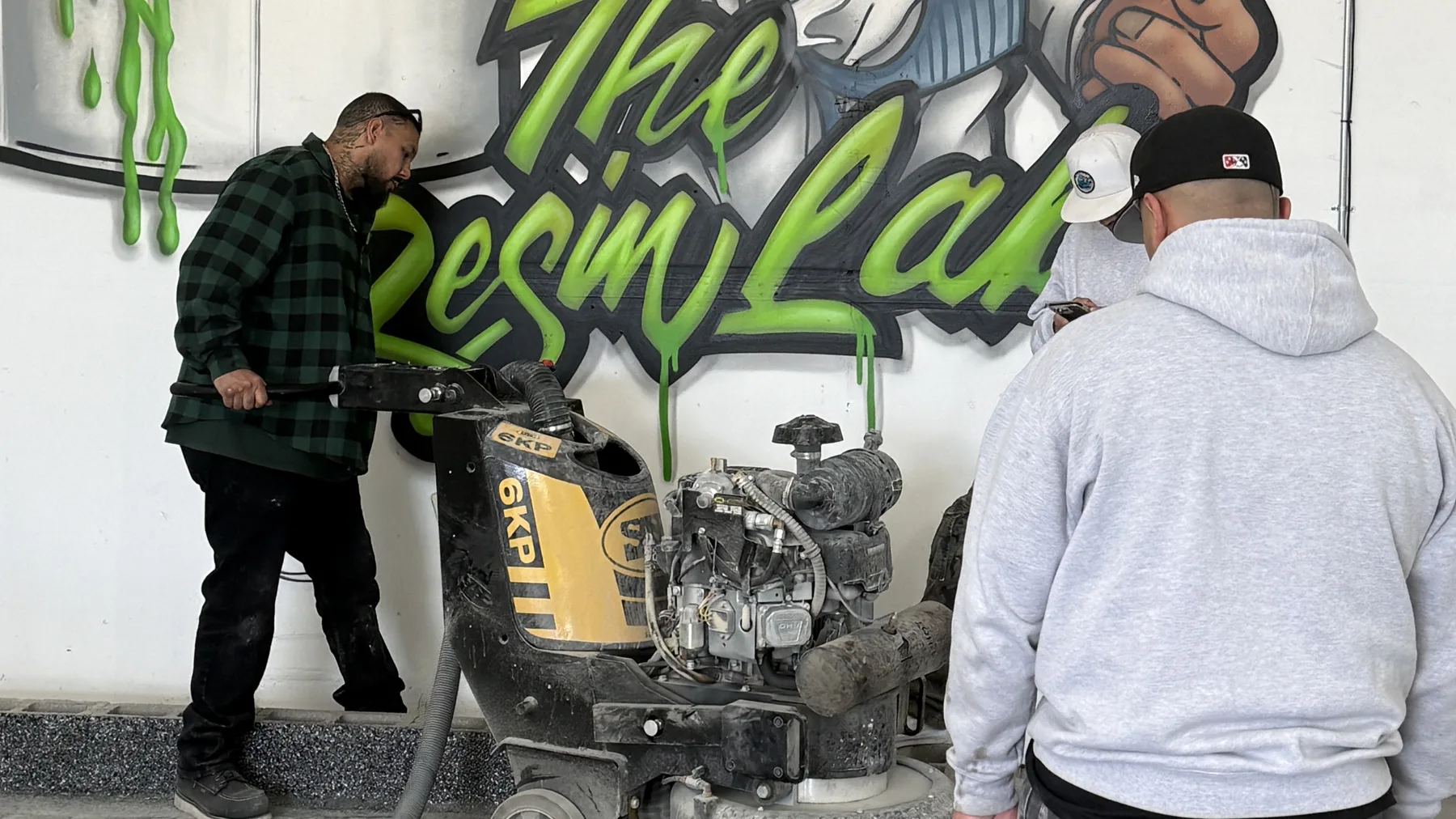
If you do not own a grinder or an extractor, both rent from the bench, and our rental machines take the same segments we sell. The concrete grinder rental page covers the machines. Grab the segments in the same pickup and the whole prep comes from one place. Once the floor is ground, vacuum it, test it for moisture, and only then open the first pail.
Segment questions from the bench
How long does one set of segments last?
It depends on two things, the hardness of the slab and how well the bond matches it. A matched set will usually handle multiple garages, while a mismatched set can be finished after one floor. That is why we ask about the slab before we ship. Describe the concrete and the job, and we will match a set that lasts.
Will your segments fit the grinder I already own?
We stock the common mounts, and our rental machines run these exact segments. Tell us the make and model of your grinder when you call and we will confirm fit before anything ships. Sending the wrong mount means a wasted day, so a quick check on the phone beats finding out on the slab with the crew already standing around.
Can I etch the slab instead of grinding it?
Etching will not hold a coating the way a ground profile does. Acid etching is not prep. Coatings bond to a mechanical profile, and every data sheet we carry says so. Grinding with the right diamonds gives you clean, open concrete at a CSP 2 to 3. Etching leaves an uneven surface that the base coat may never fully grab.
Check the diamonds early and the floor stays honest. Tell us about the slab through the contact page, or call the owner at (209) 208-4656 for a bond match before the grind starts.