
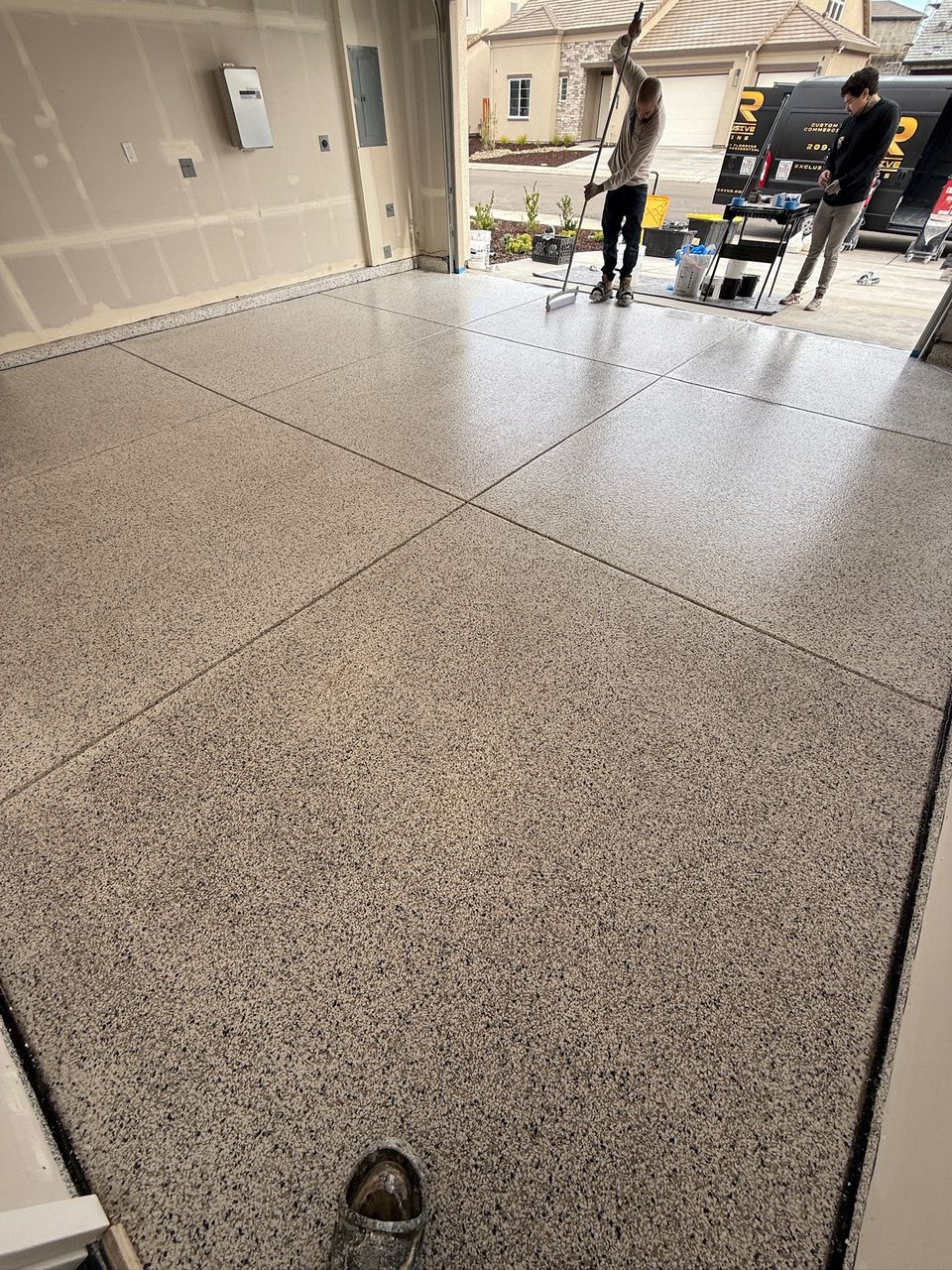
The topcoat is down, the tape is pulled, and the floor looks the best it ever will. The next month is out of your hands, and it is when most callbacks begin. Stockton sits about 22 road miles from our bench in Tracy, and the crews working there who field the fewest complaints tend to do one simple thing at handoff: they leave the property owner a written page of what to do and what to avoid. Here is what belongs on that page.
Put the cure date at the top of the sheet
Dry to the touch and fully cured are different things, and property owners only hear the first one. Write the second one down.
The data sheet for your topcoat gives separate times for light foot traffic, heavy foot traffic and vehicles, and every one of them assumes a stated temperature. A cold garage stretches all of them. Put calendar dates on the sheet instead of hours, and if the room will run cold, add time rather than quoting the sheet’s best case.
Polyaspartic topcoats often put a floor back in service sooner than epoxy, which is part of why crews sell them for garages. They still have a cure schedule, and the owner still has to follow it.
List the early rules next to the dates. No dragging furniture or tool chests, no rolling jacks, no water left standing, no tape stuck to the surface. Ask the owner to keep the garage door down if dust or leaves blow in during the first days, since anything that lands on a fresh topcoat can stick.
Hot tires, jack stands and the door line
The first time a car pulls in after a long drive on a hot day is a real test for a new floor. Hot tires soften, and on a coating that is not fully cured or not rated for it, they can leave marks, stain the surface or even lift it.
Tell the owner to wait out the full vehicle cure, and for the first few weeks to let the car cool before parking on a hot afternoon. It sounds fussy. It heads off the most common early complaint.
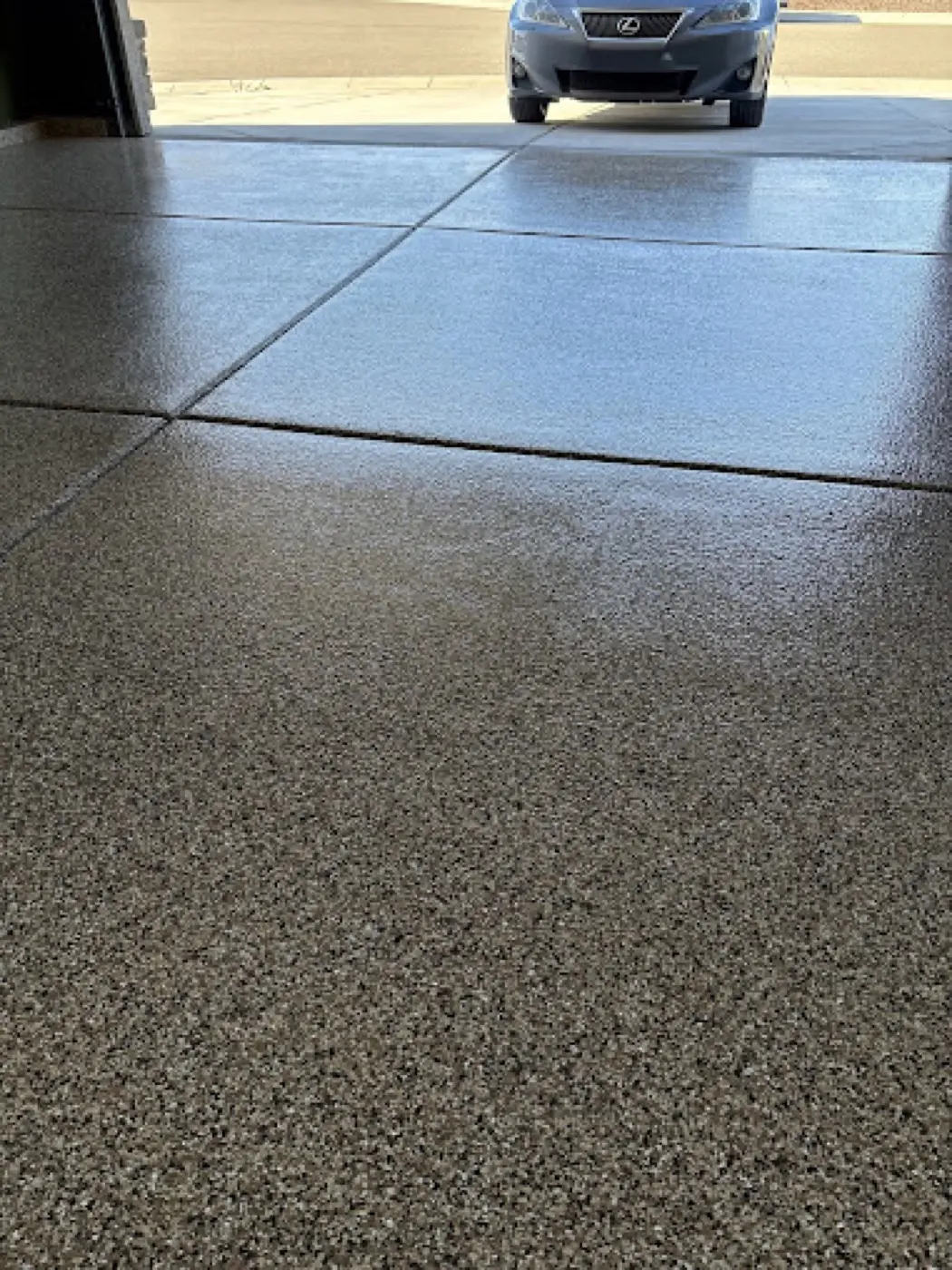
The door line takes the most abuse. The strip where the floor meets the driveway gets tracked grit, water, turning tires and sun through the open door. Sweep grit off it often, because grit under a tire works like sandpaper on the gloss.
Anyone who works on cars at home needs a line about jack stands and creepers. Set stands on plywood or rubber pads, never drag a floor jack across the finish, and clean up oil and brake fluid promptly instead of leaving it overnight.
Cleaners that keep the gloss, and the ones that dull it
Most new floors that lose their shine early lose it to the wrong bottle under the sink.
For routine cleaning, a pH-neutral cleaner, warm water and a soft mop or deck brush do the job. On a textured flake floor, a soft brush reaches into the grain better than a mop. Rinse and let the floor dry, because cleaner left on the surface can leave a film that feels slick and holds dirt.
Write out the list to avoid: harsh degreasers left sitting, acidic or citrus cleaners, full strength bleach, and anything abrasive. Several of these can dull a topcoat or leave spots over time, even when the floor survives a single use. If the owner has a favorite product, tell them to try it on a small corner first.
Tell the owner what the floor handles well, too. Spills wipe up, oil comes off, and a hose and squeegee take care of most garage messes. People who know that are less likely to reach for something aggressive.
Mats, rugs and anything with a rubber back
Owners love putting a mat down the first afternoon. On a new floor, that habit can cause trouble.
Some rubber-backed mats and rugs trap moisture and can react with a coating, leaving a yellowed or stained rectangle when the mat is lifted months later. Anything laid down before full cure can also stick or press its texture into the surface.
Suggest waiting for full cure before any mat goes down, then choosing mats sold as safe for coated floors or ones without a rubber backing. Lift and clean under them now and then so grit and water are not trapped against the topcoat.
Storage deserves a line as well. Cardboard boxes on a damp floor, plastic totes with water pooled under them, a workbench with bare steel feet dragged into place. A few felt or rubber pads under furniture feet, and a habit of lifting instead of dragging, keep that first month from leaving marks the owner will blame on the install.
When the first scuff shows up
Sooner or later a tool chest, a bike pedal or a dropped wrench marks the floor. How the owner reacts depends on what you told them in advance.
Most early scuffs sit in the top of the clear coat. Many buff out with a cleaner and a soft pad, or blend in once the floor has a little even wear across it. A fresh gloss floor shows marks in low light more than it will a few months on.
A gouge that cuts through the topcoat into the flake or build coat is a different matter. It is repairable, and the crew that laid the floor is the right one to repair it, because they know the system. Put your contact details on the sheet and ask the owner to call you before trying a hardware store touch-up kit.
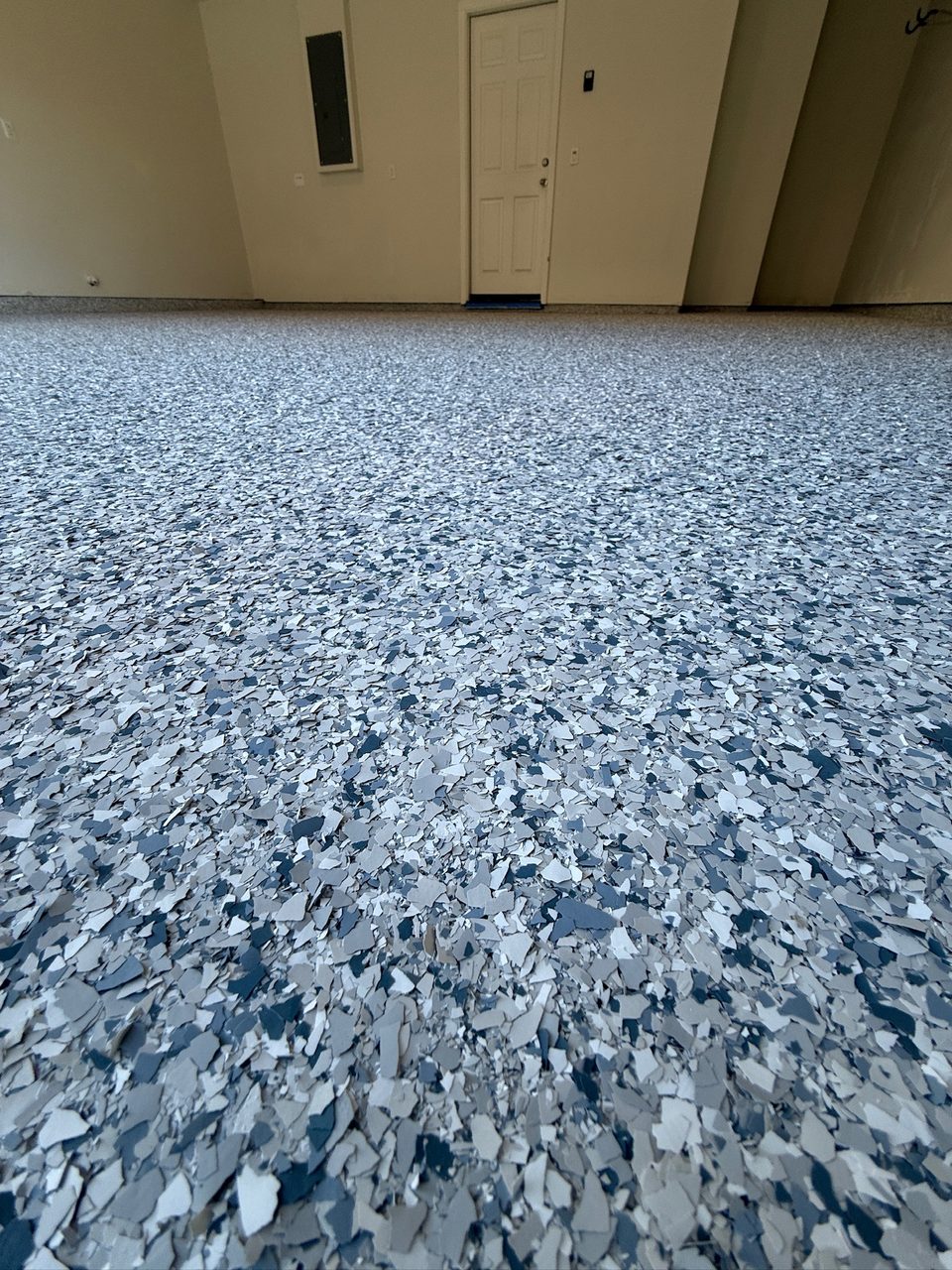
Careful crews hold back some of the same flake blend from the job, labeled with the address, so a repair matches. Order that spare box with the job. The decorative flake systems we ship to Stockton are far easier to patch invisibly when a box of the original blend is sitting on a shelf.
What property owners ask in the first month
How long before the owner can park on the new floor?
It depends on the topcoat and the temperature. The data sheet lists a separate cure time for vehicles, and a cold garage adds to it. Give the owner a calendar date rather than a number of hours, add time if the room runs cold, and ask them to let a hot car cool before parking during the first few weeks.
What cleaner should the owner use on a flake floor?
A pH-neutral cleaner with warm water and a soft brush or mop covers nearly all routine cleaning, with a rinse afterward so no residue builds up. Steer the owner away from acidic, citrus or harsh degreasing cleaners left to sit, since they can dull the topcoat. If they want a specific product, have them try a small corner first.
Is a scuff in the first month a sign the floor failed?
Usually not. Most early marks sit in the top of the clear coat and buff out or blend in with normal wear. A coating that lifts, peels, blisters or stays soft is a different story and needs a look from the installer. Explain the difference at handoff, so a scuff does not turn into a worried phone call.
The care sheet is the last thing you leave on a job and the first thing the owner reaches for when a mark shows up, so write it in plain words and leave a copy where the floor is. For a second read on the cure dates of the topcoat you ran, call the bench at (209) 208-4656 or send the system and the day it went down.