

 Simiron
Grinding
Book the grinder around what goes on top.
A planetary grinder, a matched dust extractor and diamonds chosen for your slab, ready for a Lathrop prep day. Pick it up at our Tracy shop and bring it back once the floor is open.
Start with the coating
A thin epoxy and a flake broadcast want different scratch.
Before anybody talks about machines, settle what goes down after the grind. The texture you leave, measured as a concrete surface profile or CSP, has to suit that coating. Too smooth and the resin has nothing to grab. Too rough and a thin coat telegraphs every groove straight through to the finished surface.
A thin epoxy roll coat sits at the light end, around CSP 2: the cream layer gone, the pores open, an even dull scratch everywhere. A full flake broadcast rides on a heavier base coat, so it tolerates more tooth, somewhere in CSP 2 to 3, and the chips hide small swirl marks that would show straight through a clear or a solid color.
So the first question on the phone is never how big the floor is. It is what you plan to put on it. Once we know that, the diamonds, the number of passes and the plan for the day all follow.
From the catalog
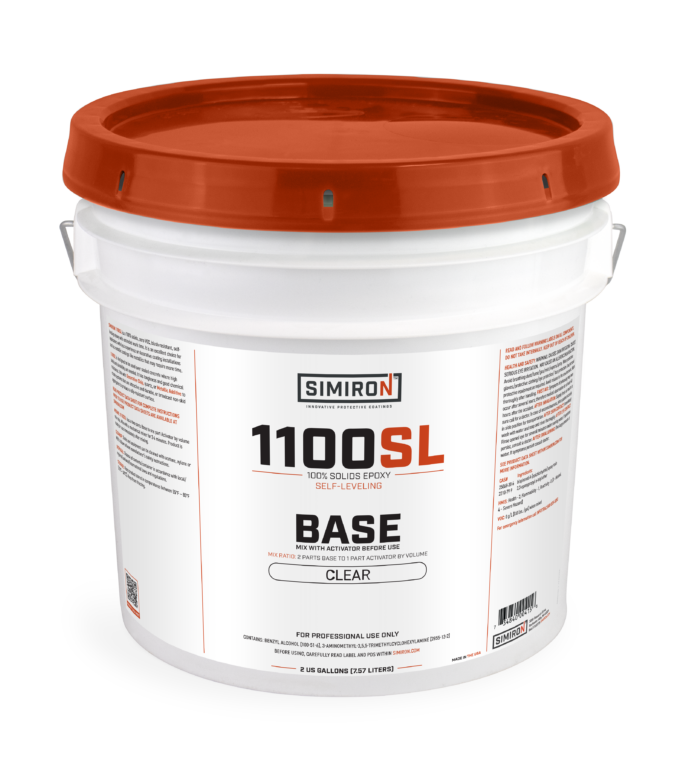
On the shelf for this job


From the first phone call to the first pass.
Call with the slab and the system
Square footage, how old the concrete is, whether it was troweled smooth or left broom finished, and anything stuck to it. Add the coating you plan to use. That one call sets the machine size and the tooling.
Clear the floor and mark the trouble
Empty the room, pull any tack strip or staples, and walk the slab with a lumber crayon. Circle cracks, patches, high spots and anything glued down. Those marks tell you where the cup wheel has work to do and where open floor can take the plates.
Find the power at the slab before pickup
Look for a 230V outlet close to the work, or confirm which circuits you can have to yourself, then tell us what you found. A grinder and extractor sharing one household garage circuit will trip it, and a dead machine halfway through the room wastes the rental.
Scratch the concrete and read the line
On a clean, dry spot, drag a hardened steel point across the surface with firm pressure. A faint line that is hard to see means dense concrete and a softer bond. A deep groove with loose grit means a soft slab and a harder bond. Call us with the result.
Settle the profile target before the first pass
Decide now whether you are grinding for a thin epoxy or a flake broadcast, and start on the grit that reaches that profile. Going back to a coarser diamond after a fine pass means covering the whole floor a second time.
Test the concrete’s hardness, then pick cup wheel or plates.
Each diamond is held by metal, and that metal needs to erode at a pace matched to the concrete it is cutting. A dense, power-troweled garage slab wants a softer bond that keeps exposing fresh diamond. A soft, sandy or broom-finished slab wants a harder bond, or it chews through tooling. Guess wrong either way and the grinder runs all day without really cutting.
The scratch test in step four is how you find out which slab you have, and it is worth repeating in a second corner on a big floor, since an old patch or an addition can be a different pour. Tell us both results and we will set the bond to match.
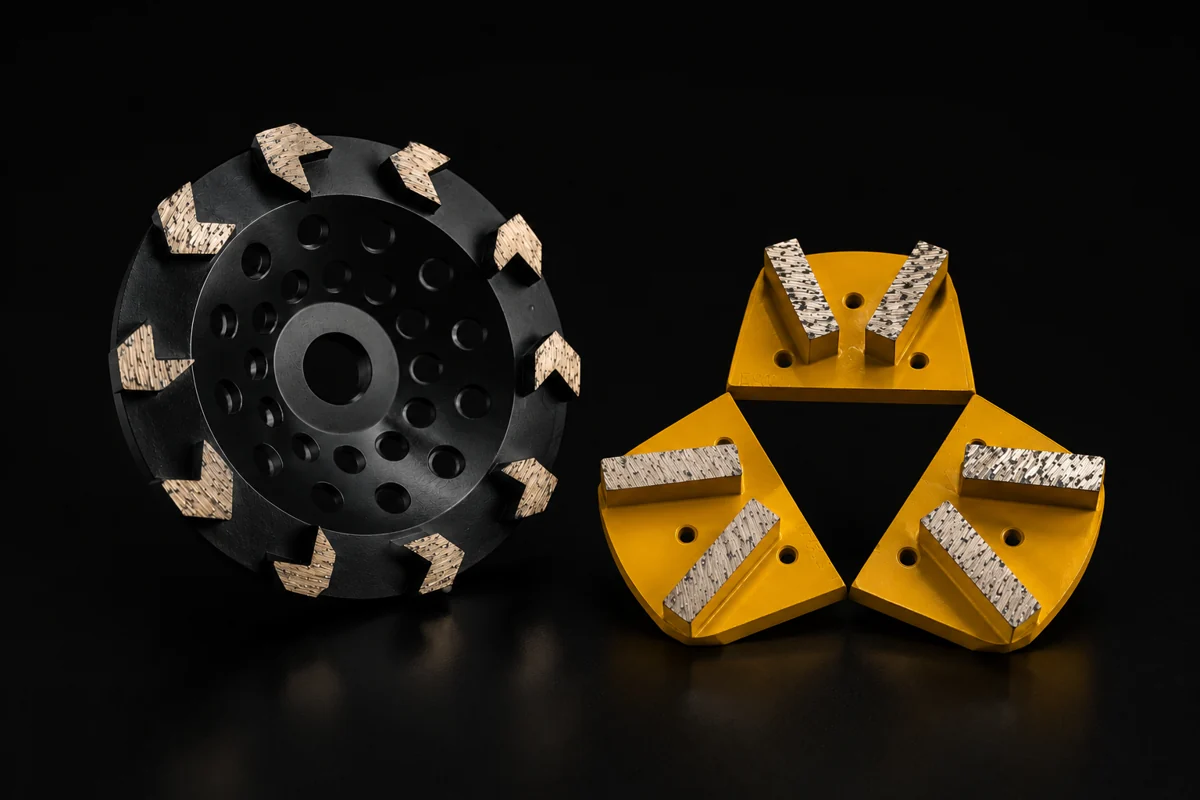
Then comes the shape. A cup wheel is aggressive and good for knocking down high spots, edges and old coatings. Trapezoid plates on the grinder heads, each with a pair of diamond bars, leave a flatter and more uniform scratch across open floor. Plenty of jobs use both. Edge tooling, crack chasers and patch material live on the tooling and prep shelf.
The bond has to wear, or the diamonds just polish the slab.
An undersized vacuum turns a grind into a dust storm.
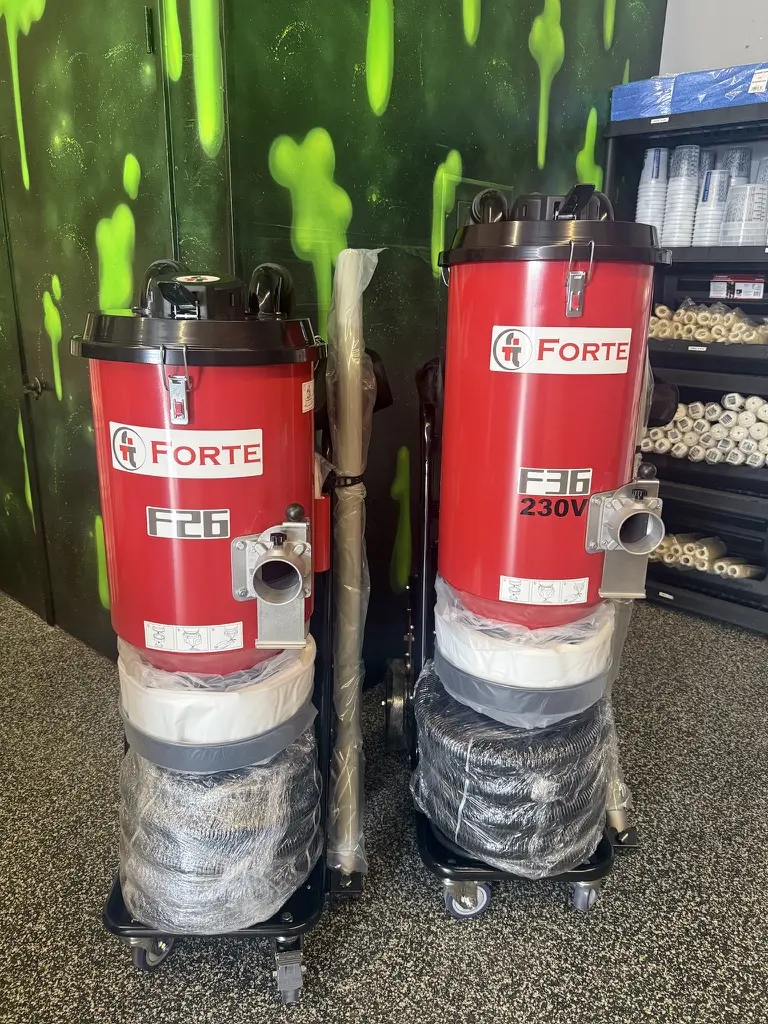
Grinding concrete throws fine silica dust, the kind you breathe without ever seeing it. The extractor has to move enough air for the width of the grinder, through a filter rated for that dust. A household shop vac clogs quickly, the shroud stops pulling, and the dust you thought you caught settles back onto the slab and into the first coat.
Match the hose to the shroud port and keep the run as short as the room allows, since extra length costs suction. Change the bag before it is full. Wear a fitted respirator even with good extraction running. If the extractor sounds strained or a gray haze trails the machine, stop and call us.
The grind is the first layer of the floor. Lathrop crews pair the rental with epoxy systems, decorative flake, metallic or a polyaspartic topcoat, and the whole order can ride home in one load.
When a DIY owner should hand the grind to a crew.
A homeowner with a bare two-car garage slab, a free weekend and some patience can rent a grinder and do good prep. The machine is heavy but steady, the extractor handles the dust, and the pickup walkthrough covers the controls. Plenty of serious DIY pros do exactly that before coating a floor themselves.
Other floors are a different story. Some slabs are simply too big to open in the time one person has the machine, and a crew running two grinders finishes in a day what a lone renter would stretch across several pickups. Thick carpet glue or old black mastic loads up diamonds and wants removal tooling plus a lab check on the mastic before anyone disturbs it. And a floor promised to a customer by a fixed date gives you no slack to learn the handles on.
In those cases, hire a prep crew and still buy your material from us. If you want to run the machine yourself next time, grinding is part of what the training academy covers. Call (209) 208-4656 and we will tell you plainly which side of that line your floor sits on.
Rent for a clean slab. Hire out the demolition.
Pickup and return both run through Tracy.
Lathrop is about 8 road miles from the Tracy shop, which makes a quick pickup and return practical on either side of a prep day. Plan both dates when you book so the machine is back before the coating goes down.
The site-wide concrete grinder rental page has the full machine detail. For everything else we supply here, the Lathrop supply page has the list, with neighboring towns on the county page. Browse the lines in the catalog, and send your dates through the contact page.
What people ask before they load the grinder.
What power does the rental need on the job?
Plan on circuits the machines do not have to share. Some of the extractors we send run on 230V, and a planetary grinder pulls hard once the diamonds bite. Tell us which outlets the slab has and how far they sit from the work, and we will match the gear and cords.
Which profile should I leave for a thin epoxy coat?
Usually the light end, around CSP 2: the cream layer gone, pores open and an even dull scratch everywhere. A flake broadcast over a heavier base can take a little more. Name the exact system and we will match the profile to it.
Should I use the cup wheel or the trapezoid plates?
Often both. The cup wheel is the aggressive option for edges, high spots and old coatings. Trapezoid plates on the grinder heads leave a flatter, more even scratch across open floor. Your slab’s hardness decides which bond each one should carry.
What do I do with the dust bags once they fill?
Change them early, since a heavy bag cuts suction long before it looks full. Close each one before you lift it out, set it straight into a contractor trash bag, and carry it off the ground slab. Keep your respirator on for the swap, because that is when dust gets loose.
How can I tell the grind opened the pores enough?
Sprinkle a little water on a vacuumed spot. On an open profile it darkens the concrete and soaks in quickly. If it sits on top in beads, that area is still sealed or burnished and needs another pass. Check the edges too, then let the slab dry before primer.
Do you grind floors in Lathrop?
No. We rent the equipment, sell the coatings and teach prep at the academy, but we do not work on your slab. If a floor really needs a crew, we will say so on the phone before you book a rental.
Home bench in Tracy, home team in Lathrop.
Every rental leaves from our shop in Tracy, and Lathrop is part of that home turf. We are members of the Lathrop Chamber of Commerce and sponsor Lathrop Little League and the Junior Spartans. Material ships to crews across the country now, but the grinders still go out the same door.
Get in touch
Tell us what you're pouring.
Anything from one bucket to a standing wholesale account, pickup or freight, or a seat in training. A person who has poured this material reads every message.
- (209) 208-4656
- chris@exclusiveresinsupply.com
- 392 W Larch Rd, Suite 11, Tracy, CA 95304
Slab in Lathrop ready for the grinder?
Call the shop with your dates and whatever is on the floor now, or send a message and we will set aside a machine fitted with tooling matched to your slab.

Need it installed?
Our sister company, Exclusive Resins, installs epoxy, flake and metallic floors across the Central Valley, out of the same Tracy building.