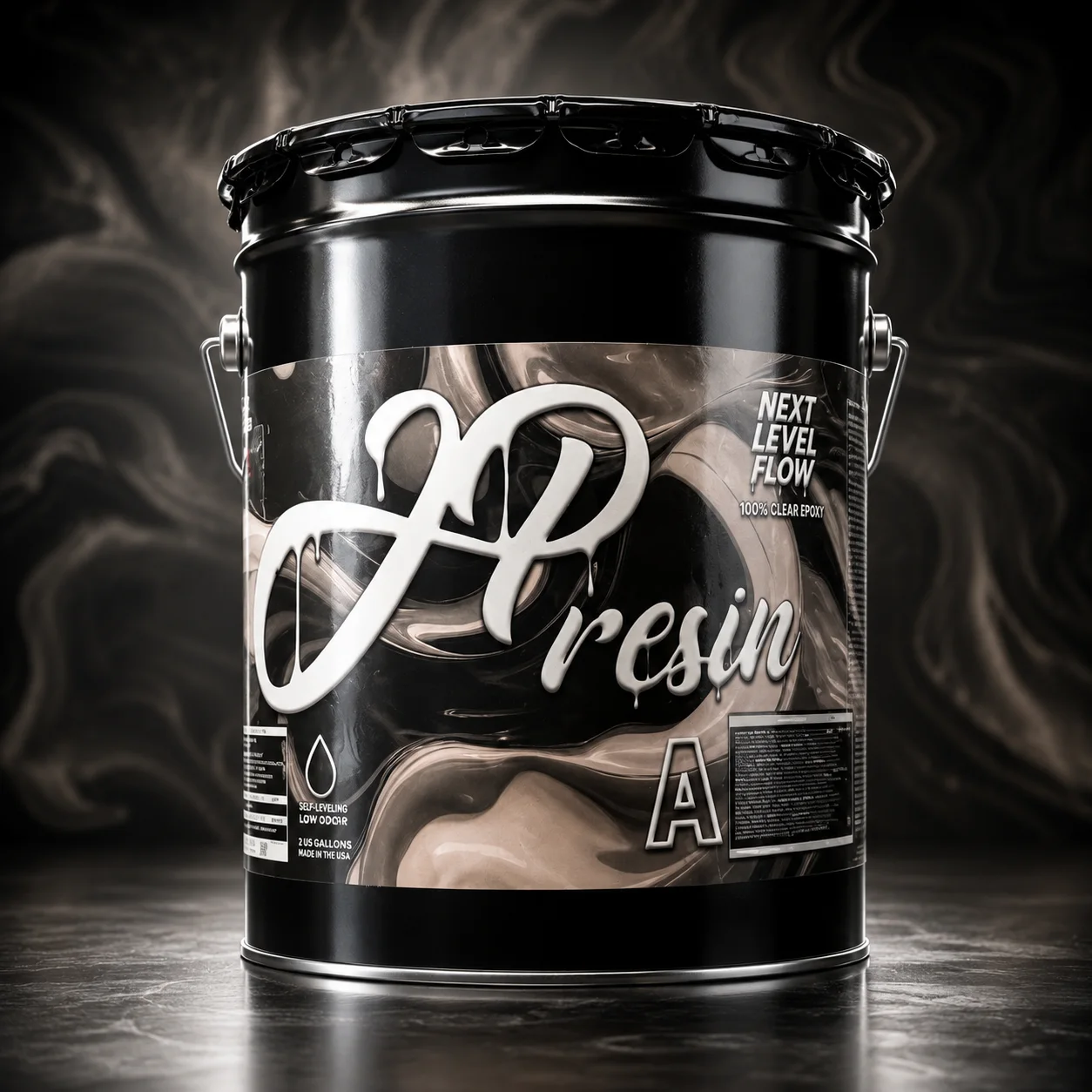

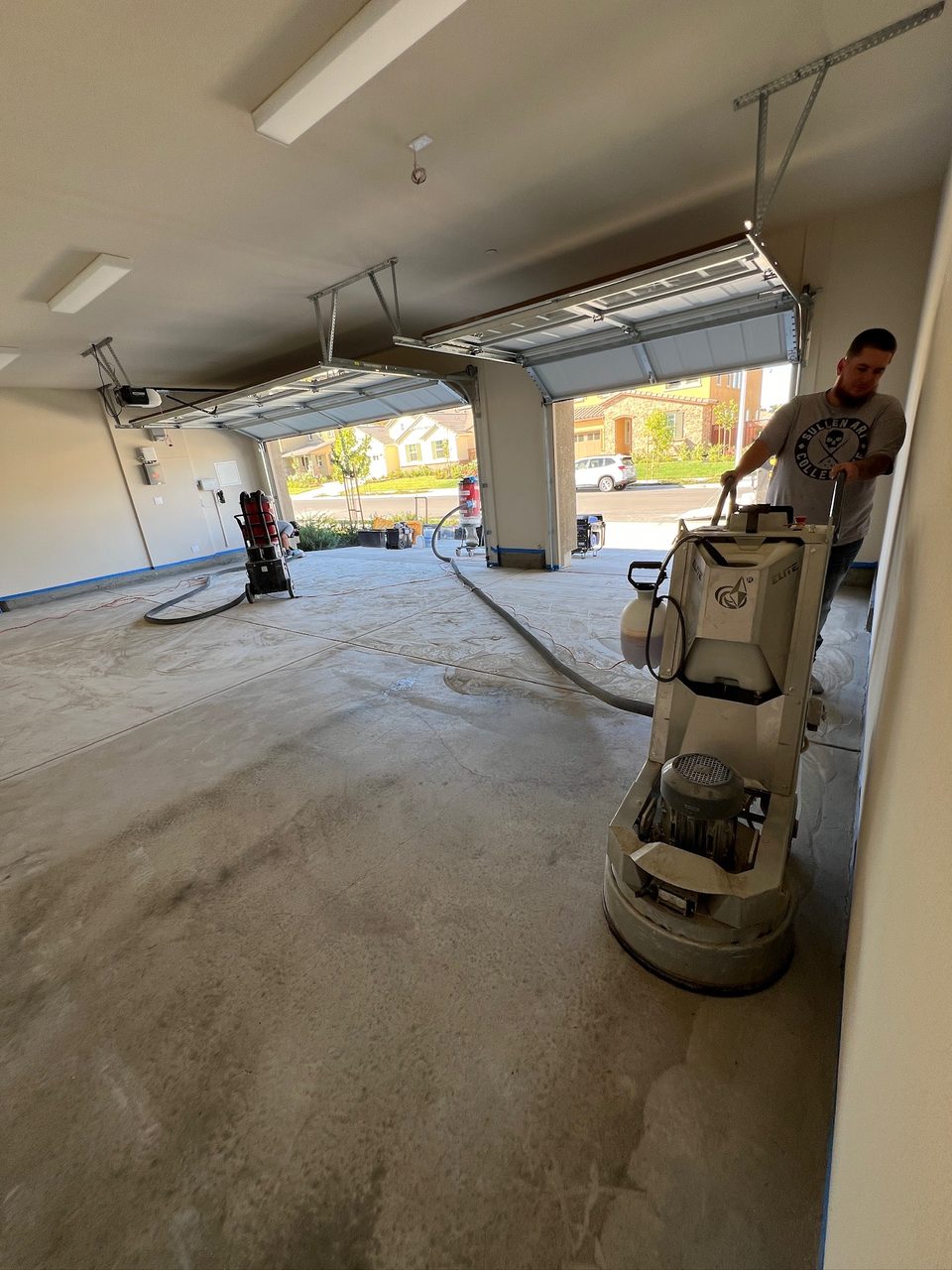
The moisture test came back high. For crews working Stockton, that result tends to arrive as a phone call with the job sitting still: they ran the test right, the number is over the limit on the base coat’s data sheet, and now what. We have already written about running the test. This post picks up after the result, when the question becomes what goes under the system so the floor stays down.
What a high reading actually changes
A number over the limit does not mean the slab is bad concrete. It means water vapor is moving up through it faster than a standard epoxy base coat is rated to handle.
Put a dense coating over that and the vapor keeps coming. It has nowhere to go, pressure builds under the film, and the result shows up weeks or months later as blisters, soft spots or coating letting go around the edges. Often the floor looks perfect at handoff, which is what makes the failure so painful.
Older on grade slabs commonly have no vapor barrier under them, and a reading can move with the season, with irrigation running beside the building, or after a wet winter. So one result is information about that slab in that week. Test more than one spot on a bigger floor, and note where the high readings cluster.
What changes is the order you make decisions in. You are no longer choosing a base coat first. You are choosing the primer the whole system will sit on, and everything above it has to agree with that choice.
Deciding whether the slab needs a mitigating primer
Start with two data sheets side by side: the base coat you planned to run, and the moisture-mitigating primer you are considering. Each publishes the reading it is rated for and the test method it expects. If your numbers sit under the base coat limit, you probably do not need the extra layer. If they sit over the base coat limit and under the primer’s, that is the job the primer was built for.
If the reading is over both, stop. That slab has a problem no coating should be asked to solve, and the building owner needs to hear it before anybody opens a kit.
Look at the future use too. A car parked on the floor, heavy rubber mats, cabinets set straight on the slab: anything that covers the surface makes a marginal slab behave worse.
Be honest about borderline numbers. A reading just over the line, on a floor the owner plans to keep for years, argues for the primer. Call the bench with the readings, the test method and the square footage, and we will talk through which primer fits the system you want to run.
How the stack changes once the primer goes under it
The mitigating primer is a real coat with a real film thickness, usually applied heavier than a standard prime. Rolling it thin to stretch a kit defeats the purpose, because the thickness is part of what holds the vapor back.
Pinholes matter more here. A pinhole in a decorative coat is a cosmetic flaw. A pinhole in the mitigation layer is a path for vapor, so some systems call for a second coat or a specific backroll to close them. Follow the sheet on that rather than habit.
Compatibility comes next. Your build coat, any flake or quartz broadcast, and the topcoat all have to be approved over that primer. Mixing manufacturers across those layers is where crews get surprised, and confirming it takes two minutes on the phone.
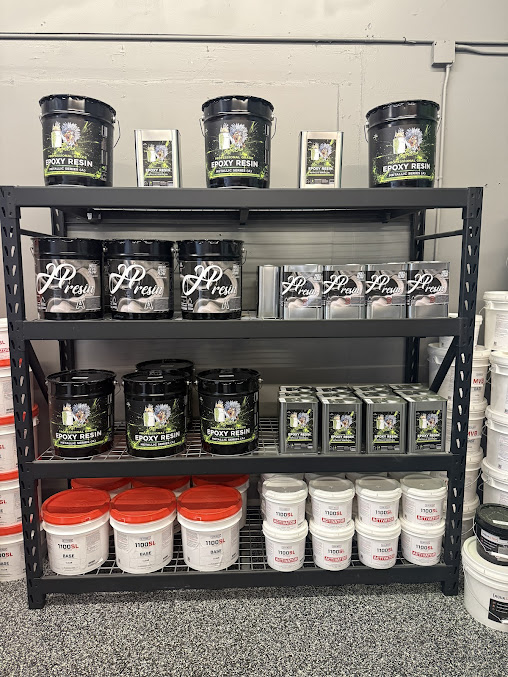
The primer changes quantities as well. Figure its coverage at the thickness the sheet calls for, allow extra for a ground slab that drinks more than the sheet says, and put it on the order with everything else. Crews running the epoxy systems we ship to Stockton usually order the full stack at once for exactly this reason.
The schedule gets longer, so sell it that way
Adding a layer adds time, and the property owner should hear that before the start date.
The primer needs its own cure before the next coat, and many systems give a recoat window with a front edge and a back edge. Go too early and you can soften the film. Go too late and, depending on the product, you may have to scuff it or broadcast sand into the primer for a mechanical bond. Either way, that window drives the calendar.
Temperature moves the window. A cold slab in winter stretches cure times, and a hot garage in summer shortens pot life and working time. Plan the day around the conditions the floor will actually see.
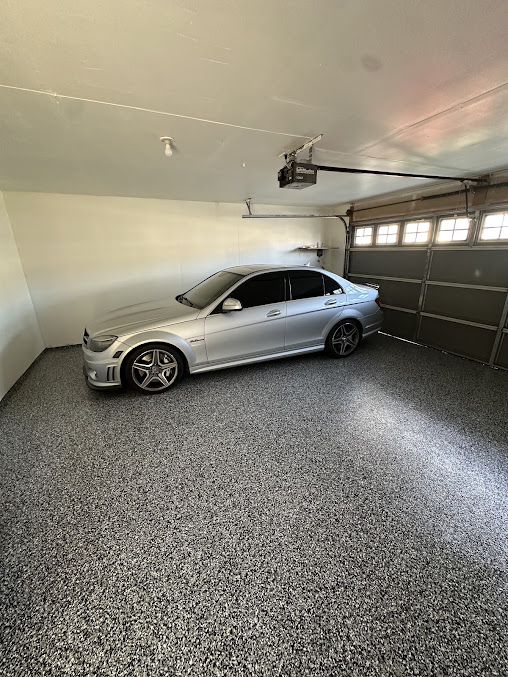
On a garage where the owner wants the car back quickly, a polyaspartic topcoat sometimes enters the conversation because it can shorten the back end of the job. It does nothing for the primer’s cure. Put the real sequence in writing: grind, repair, primer, cure, build coat, broadcast, topcoat, cure before traffic. Owners accept a longer job far more easily than a surprise one.
Prep the primer asks for that a standard base coat forgives
Mitigation primers are unforgiving about the surface under them. They need a clean, open profile in the range the data sheet specifies, and a slab that was lightly ground for a thin prime may fall short of it.
Cracks and joints get treated before the primer goes down. Vapor finds the easiest way out, and an open crack is exactly that. Fill or treat them with a product the primer’s manufacturer approves.
Dust is a bond breaker. Vacuum with an extractor, vacuum again, and keep foot traffic off the prepped slab. Anything left on the surface ends up sitting between the concrete and the one layer you are counting on most.
Keep your moisture readings and the product batch numbers in the job file. If a question ever comes up about the floor, that record shows the primer went down on a slab that was measured, prepped and within the product’s rating. It also makes the next job on a similar slab faster, because you already know what worked.
Moisture primer questions we hear on the phone
Can I skip the mitigation primer if the reading is only a little over?
You can, but you are betting the floor on it. The base coat limit exists because above it the coating is more likely to blister or lose bond, and a reading a little over this week can climb in a wet season. On a floor the owner plans to keep, the primer is usually the safer call. Call with the numbers and we will look at them with you.
Will a moisture-mitigating primer fix a slab that gets wet from above?
No. The primer is rated for vapor moving up through the concrete. Standing water from a roof leak, a bad door seal or a wash area draining the wrong way is a building problem, and it needs fixing before any coating goes down. Tell the owner, get the leak repaired, then test the slab again before you order the system.
Does the primer limit which topcoat I can run?
It can. The build coat, any broadcast and the topcoat all need to be approved over that specific primer, and products from different manufacturers do not always agree. Send us the stack you want before you order, and we will confirm every layer works together, including the topcoat you planned to offer the owner.
A high reading is a pause, and a short one if you plan it. Call the bench at (209) 208-4656 with the readings and the square footage before you change anything on the order, or send the job details and we will work the primer into the stack with you. More on what ships to Stockton crews lives on the city page.